




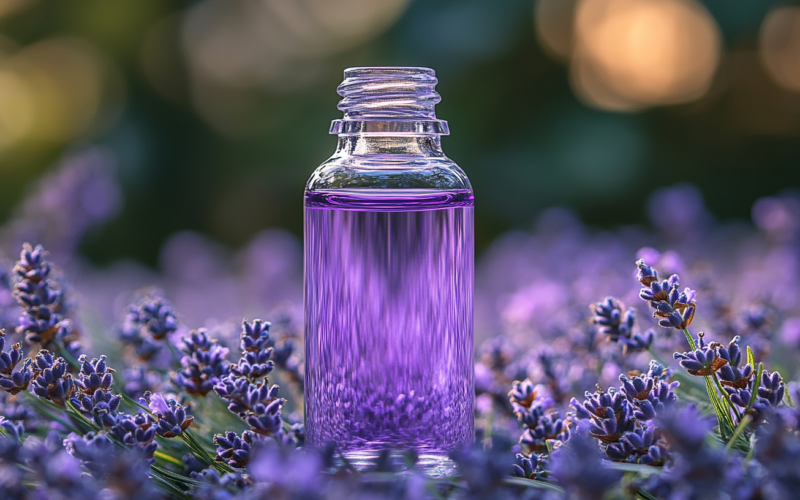
If you’re looking for a simple addition to your hair care routine, lavender oil may offer more than a pleasant scent. You can use it to support a healthier scalp, create conditions that may favor hair growth, and improve softness and shine. It may also help limit breakage by supporting moisture retention. Before you apply it, though, you’ll want to know how to use it safely.
Why Lavender Oil Supports a Healthier Scalp
A healthy scalp depends on balanced sebum production, low microbial overgrowth, and adequate circulation, and lavender oil may support these conditions. You can use it to help maintain scalp hydration without leaving a heavy residue.
Its mild antimicrobial activity may reduce surface organisms that contribute to irritation and flaking, which supports dandruff control. You may also find that its soothing properties lessen discomfort associated with dryness or sensitivity.
Its mild antimicrobial activity may help reduce irritation and flaking, while soothing dryness and scalp sensitivity.
When you apply a diluted preparation correctly, you can target the scalp directly and promote a more stable skin environment. Because your scalp barrier functions best when moisture and surface balance stay intact, lavender oil can serve as a supportive adjunct rather than a primary treatment.
Use it cautiously and consistently to avoid unnecessary irritation.
How Lavender Oil May Help Hair Growth
Lavender oil may support hair growth by improving the scalp conditions needed for normal follicle function, though evidence in humans remains limited.
You may help create a less inflamed scalp environment, which can reduce stress on follicles and support more consistent growth cycles. Lavender oil also has antimicrobial activity, so it may lower the burden of microbes that can irritate the scalp and contribute to hair damage.
If you use it correctly, you may also limit breakage from a dry or irritated scalp, which can make hair appear thinner.
However, you shouldn’t expect lavender oil to act like a proven regrowth treatment. It works best as a supportive option, not a substitute for medical care when hair loss is persistent or progressive.
Lavender Oil for Softer, Shinier Hair
Beyond possible support for scalp health, lavender oil may also improve how hair looks and feels by reducing dryness and surface roughness.
You may notice a softer texture when the oil’s hydrating properties help limit moisture loss from the hair shaft. As the cuticle lies flatter, light can reflect more evenly, which can make your hair appear shinier and smoother.
You can use diluted lavender oil as part of a leave-on or rinse-out routine, depending on your preference and hair type. Its scent benefits may also make regular care more acceptable, which can support consistent use.
For best results, apply it sparingly and distribute it evenly so you don’t leave residue. This approach focuses on cosmetic improvement without claiming direct structural repair.
Ways Lavender Oil Can Reduce Hair Breakage
By helping the hair retain moisture and reducing surface dryness, diluted lavender oil may lower the chance of strands becoming brittle and snapping during combing or styling.
By helping hair retain moisture and reducing surface dryness, diluted lavender oil may help strands resist brittleness and breakage.
You can also benefit from its mild conditioning effect, which may improve fiber flexibility and reduce friction between hairs. In hair care, lower friction often means fewer mechanical losses during brushing, detangling, and heat exposure.
Lavender benefits may extend to scalp comfort, helping you maintain a healthier environment for growth, which supports stronger-looking strands over time. When your hair stays less dry and more supple, it resists repeated stress better.
This doesn’t repair structural damage, but it can help limit additional breakage during daily handling and routine grooming.
How to Use Lavender Oil Safely on Hair
To use lavender oil safely on hair, always dilute it in a carrier oil or a formulated hair product before applying it to the scalp or strands.
You should patch test first to check for irritation, especially if you have sensitive skin or dermatitis. Use a low concentration, typically 1% to 2%, to support lavender oil benefits without increasing adverse reactions.
Massage the diluted blend into your scalp, then leave it on for the product’s recommended time before rinsing. Avoid contact with your eyes and broken skin.
You can repeat lavender oil usage a few times weekly, but stop if you notice redness, itching, or flaking. Consult a clinician if you’re pregnant, taking medications, or managing a scalp condition.
