




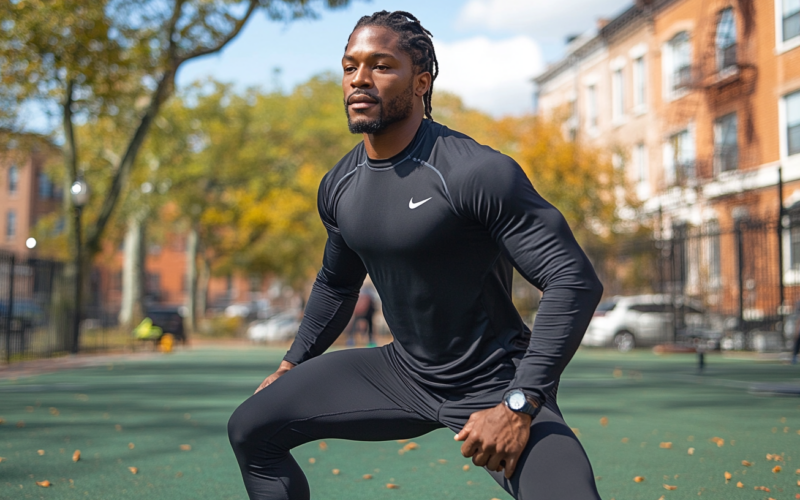
If you want stronger glutes, better posture, and more efficient movement, hip extension should be part of your home routine. You can train it with minimal equipment using moves that target the posterior chain and improve pelvic control. Some options are simple enough for beginners, while others add load or single-leg demand. The key is choosing the right variation and progressing it with purpose, which is where the next exercises come in.
What Is Hip Extension and Why Does It Matter?
Hip extension is the movement of moving your thigh backward relative to your pelvis, such as when you stand up from a chair, walk, climb stairs, or push your leg behind you during exercise. You rely on this motion whenever your hip joints extend beyond neutral.
In hip anatomy, the gluteus maximus, hamstrings, and posterior adductor magnus contribute most, while your lumbar spine should stay relatively stable. When you train hip extension, you improve force transfer through your lower body and support efficient gait mechanics.
The exercise benefits include better movement control, greater posterior-chain strength, and reduced compensatory loading at your knees and lower back. You also need adequate hip extension for daily tasks that require rising, stepping, and propulsion.
Glute Bridges for Easy Home Hip Extension
Glute bridges are one of the simplest ways to train hip extension at home because they let you load the posterior chain without standing equipment or complex setup.
You lie on your back, bend your knees, place your feet flat, and drive through your heels to lift your hips until your torso and thighs align. Keep your ribs down and pelvis level to maximize glute activation and limit lumbar extension.
Lie on your back, plant your feet, and drive through your heels to lift your hips with control.
At the top, squeeze your glutes briefly, then lower under control. This motion improves muscle engagement in the gluteus maximus and hamstrings while keeping joint demands low.
You can use slow repetitions to reinforce technique and consistent range of motion. Perform them on a firm surface for better stability and clearer force transfer throughout the movement.
Single-Leg Glute Bridges for Extra Challenge
To increase the challenge, single-leg glute bridges reduce your base of support and force each hip to extend with less assistance from the opposite side. You lie supine, plant one foot, and extend the other knee or keep it bent as you drive through the heel.
Keep your pelvis level, ribs down, and spine neutral to limit rotation. The benefits of single leg work include greater gluteus maximus demand, improved pelvic control, and higher unilateral force production. Pause at peak hip extension, then lower with control.
If you need progression, adjust tempo, hold time, or range of motion. Among the variations of glute bridges, this option raises difficulty without equipment while preserving the same basic movement pattern and emphasizing symmetrical alignment.
Quadruped Hip Extensions to Fire Up Your Glutes
From a hands-and-knees position, you extend one hip at a time in a quadruped hip extension to isolate the gluteus maximus while minimizing trunk motion. Keep your wrists under your shoulders and your knees under your hips to maintain body alignment.
Brace your abdomen, then lift one thigh until the hip reaches extension without rotating the pelvis or arching the lumbar spine. Pause briefly at the top to reinforce glute activation, then lower the leg with control. Use a slow tempo so you can detect compensation and correct it immediately.
Keep your neck neutral and distribute pressure evenly through both hands. Repeat on the opposite side for equal loading. This pattern improves posterior-chain recruitment and gives you a precise, low-load option for at-home training.
Standing Kickbacks for No-Equipment Training
Stand tall with your feet hip-width apart, then extend one leg straight back in a standing kickback while keeping your torso upright and your pelvis level.
Brace your abdomen, keep your supporting knee soft, and drive the moving leg through the hip rather than the lower back. Pause briefly at end range, then return under control without swinging.
Use bodyweight resistance to load the glute maximus and hamstrings while limiting lumbar extension. You can perform standing variations by pointing the toe, flexing the foot, or adding a slight knee bend to change the demand.
Keep your stance stable and your ribs stacked over your pelvis. For consistent activation, match each repetition to a controlled exhale and avoid trunk rotation throughout the movement.
Hip Thrusts Using a Couch or Bench
Place your upper back against a couch or bench, bend your knees, and plant your feet flat so your shins are near vertical at the top of the movement. Keep your chin tucked and brace your trunk before you drive through your heels.
Lift your hips until your torso forms a straight line from shoulders to knees, then pause briefly without overextending your lower back. Lower under control until your glutes nearly touch the floor, then repeat.
Choose a couch with firm couch stability so it won’t shift, or use a bench with an appropriate bench height that lets you maintain the correct start position. If your feet drift too close or too far away, adjust them until you feel the load in your glutes, not your hamstrings or lumbar spine.
Bird Dogs for Hip Stability and Core Control
Bird dogs train hip stability and trunk control by forcing you to resist rotation while you extend opposite arm and leg. You begin on hands and knees, keep your pelvis level, and maintain a neutral spine. As you lift one arm and the opposite leg, you should feel the glute and spinal stabilizers work together.
Keep your ribs down and avoid shifting weight side to side. Pause briefly at full reach, then return with control. This pattern improves coordination between hip extension and anti-rotation demands. If you notice lumbar extension, reduce range and refocus on engaging core.
Bird dog variations, such as leg-only reaches or toe taps, let you target control without adding excessive load. Consistent execution makes the movement precise and effective.
How to Progress Hip Extension Exercises at Home
To progress hip extension exercises at home, increase one variable at a time so you can keep technique precise and measure adaptation.
Start by adding reps until you reach the top of your target range, then increase load with a band, dumbbell, or backpack. You can also slow the lowering phase, add a pause at peak extension, or switch to single-leg versions for higher demand.
Use progression methods that preserve pelvic control and lumbar neutrality. Make form adjustments if you notice trunk rotation, rib flare, or loss of glute engagement.
Track range of motion, tempo, and resistance each session so you can compare performance objectively. If fatigue reduces quality, reduce volume and rebuild.
Progress only when you can complete every set with consistent alignment and controlled cadence.
