


If you’re looking at turmeric and curcumin, you’re probably wondering what the evidence actually supports. You’ll find that their effects extend beyond simple seasoning, from reducing inflammation and easing joint discomfort to supporting heart, brain, and immune health. Some benefits are better established than others, and a few depend on how much your body absorbs. The details matter, and they may change how you use turmeric next.
What Makes Turmeric and Curcumin Work?
Turmeric works largely because it contains curcumin, a group of bioactive compounds that can influence several pathways in the body, including inflammation and oxidative stress.
When you look at turmeric’s effects, you’re really looking at how these bioactive compounds interact with cellular signaling, enzymes, and gene expression. Curcumin doesn’t act like a single-target drug; instead, it appears to modulate multiple mechanisms at once. That broader action helps explain its therapeutic potential in research settings.
Curcumin works through multiple cellular pathways, helping explain turmeric’s broad therapeutic potential in research.
However, your body absorbs curcumin poorly on its own, so formulation matters. Pairing it with piperine or using enhanced extracts can increase bioavailability.
These details help you understand why turmeric may show measurable effects, while also clarifying its limits in practical use.
Turmeric’s Anti-Inflammatory Power
One of turmeric’s best-studied effects is its ability to help regulate inflammation. You can think of this as support for your body’s normal inflammatory response, not a cure or a substitute for medical care.
Research suggests curcumin, turmeric’s main active compound, can influence signaling pathways involved in inflammation and oxidative stress. Because turmeric contains relatively little curcumin, your turmeric dosage matters if you’re seeking measurable effects.
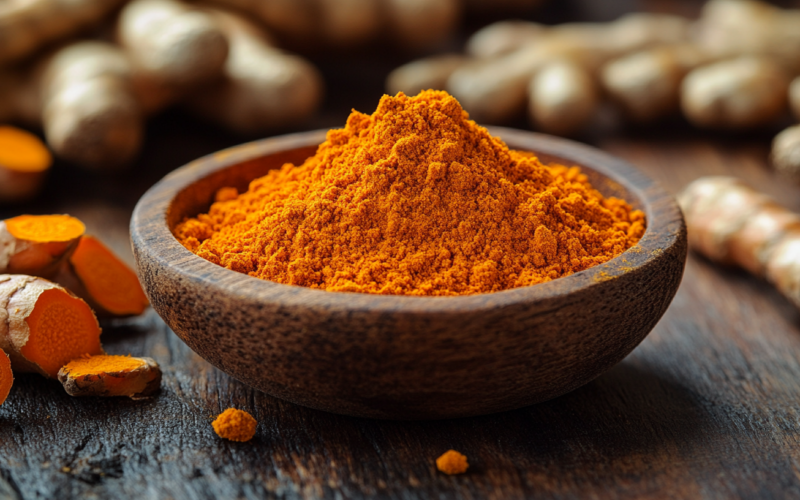
Common turmeric sources include the dried spice, teas, and standardized extracts. Food use can fit easily into your diet, while supplements usually provide more curcumin per serving.
Evidence is strongest for consistent intake over time, but results vary by product quality, formulation, and individual response.
How Curcumin Supports Joint Health
Because joint discomfort often involves inflammation, curcumin may help support joint function by influencing the same inflammatory pathways linked to stiffness and swelling.
You may notice better joint flexibility when inflammation is reduced, because less irritation can make movement feel smoother during daily activities.
Clinical studies suggest curcumin can offer modest pain relief in people with osteoarthritis, especially when used consistently and at studied doses.
It may also help lower markers associated with inflammatory activity, which could support comfort over time.
However, results vary, and you shouldn’t expect immediate effects or complete symptom control.
Curcumin works best as part of a broader plan that includes exercise, weight management, and medical guidance when needed.
Safety matters, especially if you take blood thinners or have gallbladder problems.
Turmeric and Curcumin for Brain Health
Although researchers are still studying the effects, curcumin may support brain health by helping reduce inflammation and oxidative stress, two processes that can affect neurons over time.
You may benefit because these mechanisms are linked to age-related changes in cognitive function. Some studies suggest curcumin can cross the blood-brain barrier and influence pathways involved in memory enhancement, attention, and neuronal signaling.
Evidence remains limited, but current findings indicate potential support for short-term and long-term brain performance.
If you choose turmeric or curcumin supplements, you should use them consistently and talk with a healthcare professional, especially if you take medications or have a medical condition. Whole turmeric in food can also contribute small amounts of curcumin safely and regularly.
Heart Health Benefits of Turmeric
Turmeric’s active compound, curcumin, may support heart health by helping reduce inflammation and oxidative stress, both of which are linked to cardiovascular disease risk.
You may also benefit from turmeric compounds that influence endothelial function, which helps blood vessels relax and maintain healthy circulation.
Research suggests curcumin can modestly improve some markers related to cholesterol and triglycerides, although results vary across studies and formulations.
You shouldn’t view turmeric as a replacement for diet, exercise, or prescribed treatment, but it may serve as a supportive addition to an overall heart-healthy lifestyle.
Because curcumin has low natural absorption, products that pair it with black pepper or specialized delivery systems may produce stronger effects.
Talk with your clinician before using supplements, especially if you take blood thinners or other medications regularly.
How Turmeric Aids Digestion
Turmeric may aid digestion by stimulating bile production, which can help your body break down fats more efficiently. You may also support digestive enzymes, which can improve the processing of food in the small intestine.
Some evidence suggests turmeric can influence stomach acidity and promote better digestive comfort after meals. By helping regulate the gut microbiome, it may contribute to intestinal health and reduce gut inflammation in people with sensitive digestion. This can, in turn, support nutrient absorption from the foods you eat.
While effects vary, turmeric’s active compounds appear to act on several steps of digestion rather than on one process alone. If you already have digestive concerns, you should use it as part of a balanced diet and not as a substitute for medical care.
Turmeric’s Antioxidant Protection
One of turmeric’s best-known roles is helping defend cells against oxidative stress. When you include turmeric in your diet, you introduce curcuminoids that can help neutralize reactive molecules before they trigger cellular damage.
Research suggests this antioxidant action works through direct scavenging and by influencing your body’s own defense enzymes. You shouldn’t view turmeric as a cure, but you can see it as one useful dietary factor that supports normal redox balance. Its effects appear modest on their own, yet they may matter when your meals already emphasize fruits, vegetables, and other antioxidant-rich foods.
Because curcumin is absorbed poorly, you’ll usually get the most practical benefits from regular use in food rather than isolated, high-dose assumptions.
How Curcumin Supports Immune Health
Curcumin may support immune health by helping modulate inflammatory signaling and antioxidant defenses that influence how immune cells respond to stress.
You may see curcumin benefits in how it helps maintain balanced immune activity rather than overstimulating responses. Research suggests it can affect pathways involved in immune modulation, including signals that regulate cytokine production and cellular defense mechanisms.
This matters because your immune system works best when it responds strongly enough to threats without driving unnecessary inflammation.
Curcumin’s effects appear supportive, not curative, and they depend on dose, formulation, and individual context. You shouldn’t treat it as a substitute for medical care, but evidence indicates it can be a useful dietary component that complements broader habits such as adequate sleep, varied nutrition, and consistent physical activity.
Turmeric and Blood Sugar Balance
Because blood sugar balance depends on how well your body handles glucose after meals, turmeric has drawn interest for its potential role in supporting metabolic health.
You may see modest improvements in blood sugar regulation in some studies, especially when curcumin is taken regularly alongside diet and exercise. Research suggests it can influence inflammatory pathways and insulin sensitivity, but findings aren’t uniform, and effects vary by person.
Some studies show modest blood sugar benefits with regular curcumin use, though results vary widely.
If you have prediabetes or type 2 diabetes, you shouldn’t treat turmeric as a replacement for prescribed care. The ideal turmeric dosage for this purpose isn’t established, and product quality matters because curcumin content differs widely.
Discuss use with your clinician if you take glucose-lowering medicines, since combined effects could increase hypoglycemia risk.
How to Add Turmeric to Your Routine
To add turmeric to your routine, start with food rather than supplements when possible, since it’s easier to gauge tolerance and incorporate into meals.
You can stir the spice into soups, stews, rice, eggs, and roasted vegetables, or blend it into turmeric smoothies with fruit, yogurt, or milk.
Pair it with black pepper and a fat source, such as olive oil or nuts, because piperine and dietary fat can improve curcumin absorption.
Begin with small amounts and increase gradually if you tolerate it well.
If you want a standardized dose, turmeric supplements may help, but they vary in curcumin content and can interact with medications.
Check product labels, choose third-party tested options, and talk with your clinician if you take anticoagulants, diabetes drugs, or have gallbladder disease.
